SEASON 2 : 03.26.26 : TEASER


David Bowie – Blackstar (limited edition vinyl album)
Bowie’s final studio album, recorded in secret with a boundary-pushing jazz ensemble, blending art rock, electronics, and avant-garde jazz into a stark, transformative farewell, housed in Jonathan Barnbrook’s now-iconic die-cut sleeve design.
“Blackstar” (stylised as ★) is the twenty-sixth and final studio album by David Bowie, released on 8 January 2016, his 69th birthday. Recorded in secret in New York with longtime collaborator Tony Visconti and a quartet of leading-edge jazz musicians—Donny McCaslin, Jason Lindner, Tim Lefebvre, and Mark Guiliana—the album also features contributions from guitarist Ben Monder and LCD Soundsystem’s James Murphy. It includes “Lazarus,” written for Bowie’s stage musical of the same name, alongside new versions of earlier pieces “Sue (Or in a Season of Crime)” and “‘Tis a Pity She Was a Whore.”
More adventurous than “The Next Day”, “Blackstar” folds art rock, avant-garde jazz, electronics, and contemporary hip hop influences into a suite of songs preoccupied with mortality, transformation, and the thresholds between life and death. Bowie was listening to Kendrick Lamar, Death Grips, and D’Angelo while shaping the record, and those reference points helped push him—and the band—into unfamiliar territory. The result is an album that sounds both completely new for Bowie and unmistakably his.
The visual identity of “Blackstar” is equally significant. The stark, symbol-based cover by Jonathan Barnbrook—Bowie’s most important design collaborator of the 21st century—introduced a graphic language that echoed Bowie’s lifelong interest in semiotics, modernism, and the power of reduction. The vinyl edition, with its die-cut star revealing a field of light beneath, became instantly iconic. Barnbrook’s work follows a lineage of British design in which Bowie himself played a central catalytic role.
From the 1970s onward, Bowie’s partnerships with designers reshaped how music could look and feel. Vaughan Oliver, who later influenced entire generations of designers, often cited Bowie as a foundational creative force: not just a musician but a visual thinker whose approach to identity, mood, typography, and photographic language set a benchmark for the post-punk, new wave, and electronic scenes. In this sense, “Blackstar” stands in a direct line with Bowie’s earlier experiments in visual culture, offering one final, radical statement.
Released just two days before his death, the album became a global commercial success, topping the charts in the UK and giving Bowie his first No. 1 on the US Billboard 200. It went on to win multiple Grammy Awards and was widely hailed as one of his greatest achievements: a meticulously constructed farewell that still feels audacious, disruptive and deeply moving. Many critics have since described “Blackstar” as one of the most powerful final albums ever made.
0 reviews for David Bowie – Blackstar (limited edition vinyl album)
Only logged in customers who have purchased this product may leave a review.
Related Products
-

aja monet – when the poems do what they do (vinyl album)
Buy product -
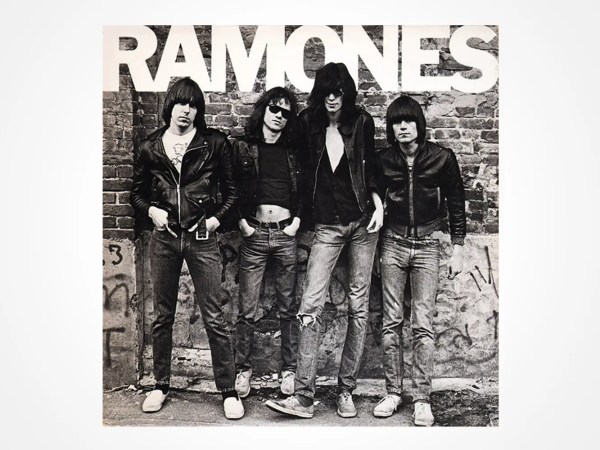
Ramones – Ramones (vinyl album)
Buy product -

Sex Pistols – Never Mind the Bollocks (vinyl album)
Buy product -
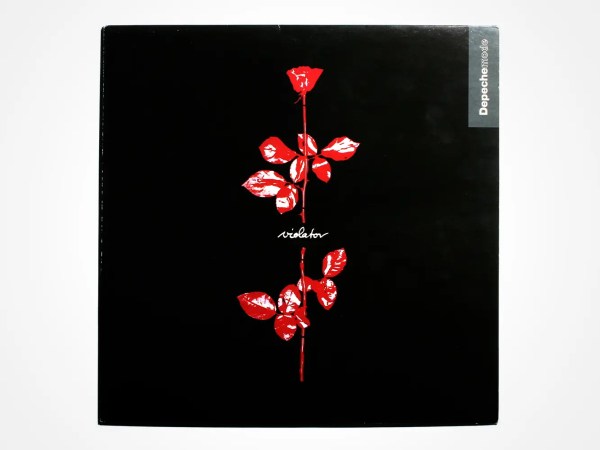
Depeche Mode – Violator (vinyl album)
Buy product -

Kraftwerk – Autobahn (vinyl album)
Buy product -

Cocteau Twins – Pearly-Dewdrops’ Drops (vintage vinyl EP)
Buy product